Research

From molecular anatomy to circuit-level behaviour.

Four interlocking themes drive our work. Each combines genetic dissection of cell types with circuit-level perturbation and quantitative behaviour.

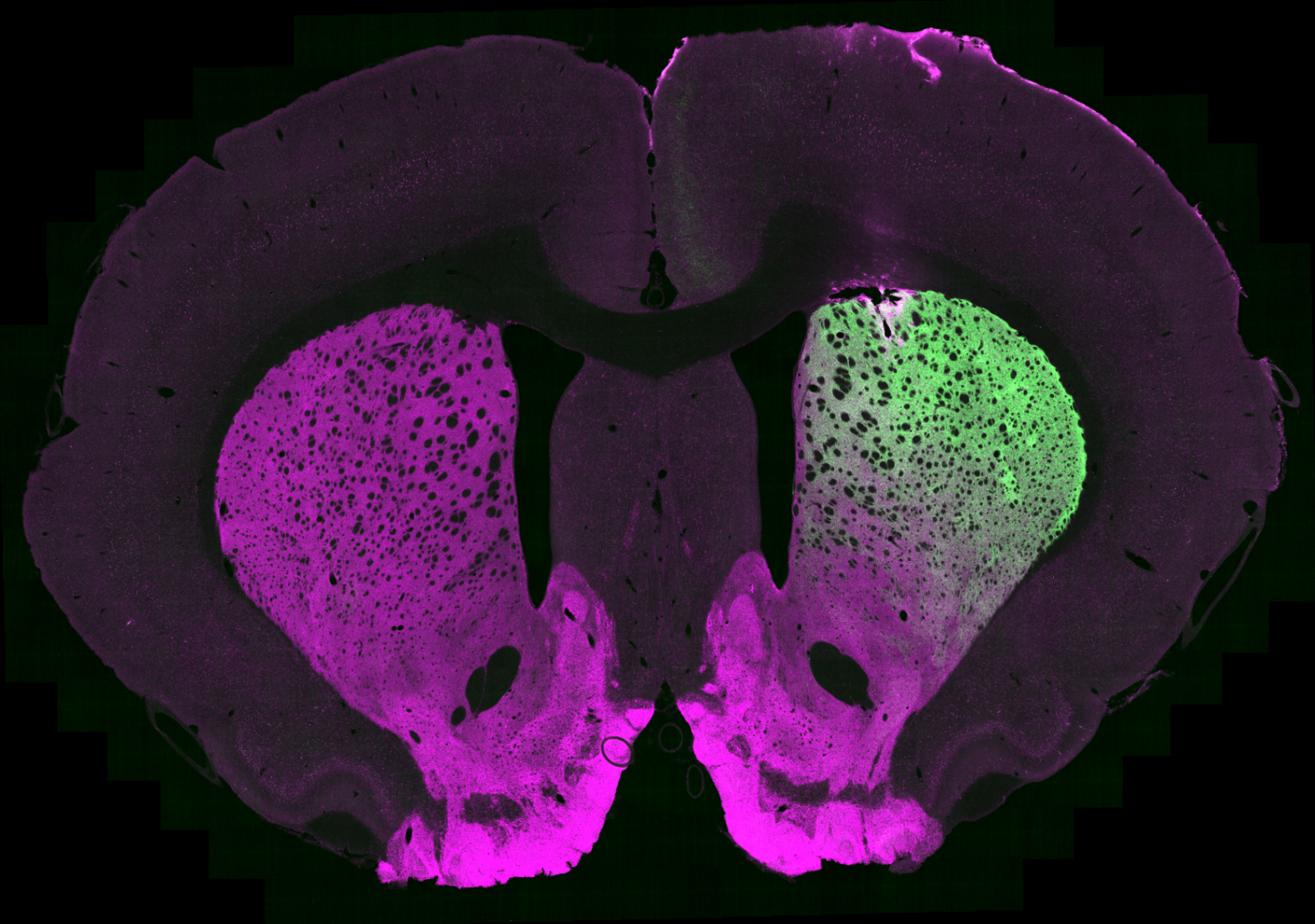
Fluorescence image of a coronal mouse brain section
01

The subthalamic nucleus, decomposed

Using spatial and single-cell transcriptomics we have identified molecularly distinct subpopulations within the rodent and primate STN and para-STN. Cross-species analyses reveal mRNA patterns unique to primate STN and directly relevant to neuropsychiatry and Parkinson's disease.

Selected references

  • · Wallén-Mackenzie et al., Communications Biology (2020)
  • · Prasad & Wallén-Mackenzie, Communications Biology (2024)
02

STN in motor control, aversion and avoidance

Optogenetic activation and silencing of defined STN subpopulations in freely-behaving mice has revealed roles beyond classical motor gating — including aversive learning, behavioural avoidance and reward-related processing.

Selected references

  • · Guillaumin et al., Brain Research (2021)
  • · Serra et al., Cell Reports (2023)
03

Dopamine neurons speak more than one language

A substantial fraction of midbrain dopamine neurons co-release glutamate via VGLUT2. We dissect how this co-transmission shapes mesoaccumbal and mesocortical signalling, growth and survival of dopamine neurons, and behavioural responses to psychostimulants and natural reward.

Selected references

  • · El Mestikawy, Wallén-Mackenzie et al., Nat Rev Neurosci (2011)
  • · Papathanou et al., Front Neural Circuits (2018)
04

Translational implications

Our work informs the development of next-generation deep brain stimulation targets, models of 6-OHDA-induced Parkinsonism, and the search for molecular handles on substance use disorder and neuropsychiatric symptoms of DBS.

Selected references

  • · Ricci et al., Neuropharmacology (2024)
  • · Guillaumin et al., Scand J Lab Anim Sci (2022)